CV
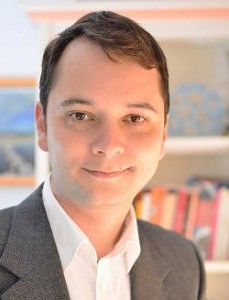 Luis E. F. Foà Torres (b. 1978) is a condensed matter physicist and Full Professor of Physics at the University of Chile (FCFM). Before that, he built his career on both sides of the Atlantic: in Argentina, as a CONICET Independent Research Scientist; in Germany, as a fellow of the Alexander von Humboldt Foundation at TU Dresden; in France, at CEA-Grenoble; and in Italy, at the Abdus Salam International Centre for Theoretical Physics, first as a postdoctoral fellow and later as Junior Associate of its Condensed Matter Section (2011–2016). He was a Simons Associate of ICTP’s Condensed Matter Section (2020–2025), and in 2018 was awarded the ICTP Prize in recognition of his work.
His research focuses on quantum transport, two-dimensional materials such as graphene, topological insulators, and the physics of driven systems. Inelastic effects arising from electron–phonon and electron–photon interactions — quantum pumping and Floquet topological states among them — take center stage in his contributions. He has authored more than 80 publications in international journals and a book published by Cambridge University Press, collectively drawing more than 5,800 citations with an h-index of 34. He has delivered more than 60 invited and plenary talks at international conferences, workshops, and meetings, and referees for 25 agencies and institutions across fifteen countries, including the European Research Council, the Agence Nationale de la Recherche (France), the National Science Foundation (US), the Austrian Science Fund (FWF), and the Dutch Research Council (NWO). He has also examined 17 doctoral theses in Argentina, Chile, India, and the United States. Named an Outstanding Referee of the American Physical Society, he served on the Editorial Board of Physical Review Letters (Condensed Matter Physics, 2022–2024) and has been an academic Associate Editor of Physical Review Research since April 2024. From July 2024 to July 2026, he served as Director of the Physics Department at FCFM, Universidad de Chile.
Main scientific achievements and appraisal of our research
My works combine insights in condensed matter concepts, technology driven goals and sheer curiosity. Eight of these ideas, from prediction to observation:
Eight predictions · six confirmed · two still waiting
The laws of physics list no precision variable — yet non-Hermitian evolution turns any finite precision into a hard, falsifiable predictability horizon.
L. E. F. Foa Torres, G. Pappas, V. Achilleos, and D. Bautista Avilés, Physical Review A 114, 012207 (2026)
Still open — and counting.
Still open — verified numerically and across hardware precisions; not yet tested in a physical experiment.
A pristine non-Hermitian lattice loses all its extended states, localizing at the boundary — this is now called the non-Hermitian skin effect.
V. M. Martinez-Alvarez et al., Physical Review B 97, 121401(R) (2018)
Seen in mechanics, then photonics, circuits, active matter.
Nat. Commun. (2019) · Nat. Phys. (2020) · Phys. Rev. Research (2020) · Nat. Commun. (2021)
A periodically driven topological insulator chain develops anomalous modes with no static counterpart.
V. Dal Lago, M. Atala, and L. E. F. Foa Torres, Physical Review A 92, 023624 (2015)
Anomalous π modes observed directly in a photonic Floquet lattice.
Cheng et al., Physical Review Letters 122, 173901 (2019)
A light-induced Hall response in graphene — its rough plateau not matching the channel count.
Foa Torres et al., Phys. Rev. Lett. 113, 266801 (2014)
Measured directly in laser-illuminated graphene.
McIver et al., Nature Physics 16, 38 (2020)
A mid-infrared laser to induce and tune a bandgap in graphene.
Calvo et al., Appl. Phys. Lett. 98, 232103 (2011)
Confirmed in graphene by two independent groups.
Merboldt et al. & Choi et al., Nature Physics 21, 1093 & 1100 (2025)
A Peierls-like mechanism switching on in carbon nanotubes at high bias.
Foa Torres and Roche, Physical Review Letters 97, 076804 (2006)
Still open — and counting.
Still open.
A current at zero bias from a single time-dependent gate voltage.
Foa Torres, Physical Review B 72, 245339 (2005)
Experiments demonstrated single-parameter pumps.
Phys. Rev. B 77, 153301 (2008)
A saser — coherent ultrasound generated electrically in a semiconductor.
Foa Torres et al., Physical Review B 64, 193304 (2001); Camps et al., Physical Review B 64, 125311 (2001)
First experimental demonstration of a phonon laser.
Physical Review Letters 104, 083901 (2010)
- Precision-induced irreversibility in non-Hermitian systems [L. E. F. Foa Torres, G. Pappas, V. Achilleos, and D. Bautista Avilés, Physical Review A 114, 012207 (2026)]. Precision appears nowhere among the variables of physical law, and yet amplification and mode mixing in non-Hermitian systems turn any finite resolution floor into a quantitative predictability horizon: a falsifiable limit beyond which reversible dynamics becomes effectively irreversible. Verified numerically and across hardware precisions; not yet tested in a physical experiment.
- Prediction of anomalous localization in non-Hermitian systems [V. M. Martinez-Alvarez, J. E. Barrios Vargas, and L. E. F. Foa Torres, Physical Review B 97, 121401(R) (2018)], whereby a pristine non-Hermitian lattice may become devoid of extended states. This effect was called later on non-Hermitian skin effect by other authors and has been verified in experiments transcending condensed matter, including mechanical metamaterials, a quantum walk with photons, topoelectrical circuits, acoustic systems, active matter and active metamaterials (click for more information). As of May 2026 it is the most cited of the 10,127 articles published in Physical Review B in 2018 (Web of Science), placing it in the top 1 per cent of its field.
- Prediction of Floquet topological transitions in a driven one-dimensional topological insulator [V. Dal Lago, M. Atala, and L. E. F. Foa Torres, Physical Review A 92, 023624 (2015)], including anomalous π-quasienergy edge modes with no counterpart in the static topology. These anomalous modes were later observed directly in a photonic Floquet lattice [Cheng et al., Physical Review Letters 122, 173901 (2019)].
- Elucidating laser-induced chiral edge states in graphene [Perez-Piskunow et al., Physical Review B 89, 121401(R) (2014); Usaj et al., Physical Review B 90, 115423 (2014)] as well as their Hall response [Foa Torres et al., Physical Review Letters 113, 266801 (2014)], whose rough plateau does not match the number of channels. The Hall response of laser-illuminated graphene was experimentally observed in McIver et al., Nature Physics 16, 38–41 (2020). Two of these papers made half of the core highly cited papers in an emerging research front reported by Thomson Reuters (Periodically driven systems, 2017) and are within the top 1 per cent of the physics literature published around the same time.
- Prediction of tunable laser-induced bandgaps in graphene using mid-infrared lasers [Calvo et al., Applied Physics Letters 98, 232103 (2011)]. The same physics was observed at the surface of a topological insulator [Wang et al., Science 342, 453 (2013)] and was confirmed in graphene in 2025 by two independent groups [Merboldt et al., Nature Physics 21, 1093 (2025); Choi et al., Nature Physics 21, 1100 (2025)].
- Prediction of a Peierls-like mechanism in carbon nanotubes at high bias [Foa Torres and Roche, Physical Review Letters 97, 076804 (2006)]. Still without experimental confirmation.
- Elucidating the role of time-dependent fields in quantum charge pumping — the generation of a current at zero bias — with a single time-dependent gate voltage [Foa Torres, Physical Review B 72, 245339 (2005)]. Experiments on single-parameter pumps came later, in 2008 [Kaestner et al., Physical Review B 77, 153301 (2008)], holding great promise either in metrology or for new devices operating at the quantum limit.
- A proposal for the generation of coherent ultrasound by electrical means in semiconductors, i.e. a phonon laser [Foa Torres et al., Physical Review B 64, 193304 (2001); Camps et al., Physical Review B 64, 125311 (2001)]. This kind of device was first demonstrated experimentally almost a decade later (see also the accompanying Physics Viewpoint).
Further detail is in the full publication list and Google Scholar record.
Awards and honors
- Simons’ Associate of the Condensed Matter section of the Abdus Salam International Centre for Theoretical Physics (ICTP), Trieste, Italy (2020-2025).
- Listed in the Stanford/Elsevier bibliometric study of the top 2% most-cited scientists worldwide — every yearly edition 2020–2024, and career-long in the 2023 and 2024 editions.
- PRB 97, 121401(R) (2018) is the most-cited of the 10,127 articles published in Physical Review B in 2018 (Web of Science, May 2026), placing it in the Web-of-Science top 1% of its field. The Floquet graphene work was highlighted as a Thomson Reuters “emerging research front”.
- Best Teacher Award (Mejor Docente), Universidad de Chile, 2020 & 2021.
- Visiting Professor of the University of Buenos Aires, Argentina (2019).
- ICTP Prize 2018.
- Outstanding Referee of the American Physical Society (2018).
- Joven Sobresaliente del año 2011, given by Córdoba’s Stock Exchange (2011).
- Humboldt Research Fellow of the Alexander von Humboldt Foundation (2008-2009).
Honorary service to the community
- Peer Review Ambassador at the Institute of Physics (IOP), leading reviewer-training workshops (2023 to present).
- Member of the Editorial Board of Physical Review Letters, Divisional Assistant Editor (Condensed Matter Physics), June 2022- April 2024.
- Editorial Fellow (Physics) at SciPost, a community driven infrastructure for scientific publishing (March 2020-April 2024).
- Member of the editorial board of Journal of Physics Materials (2020 to present).
- Member of the International Scientific Committee of the Graphene Conference series (2019-2023).
- Section Editor of the LT27: Proceedings of the 27th International Conference on Low Temperature Physics (Quantum Transport Section), published in Journal of Physics Conference Series, volume 568, 2014 (ca. 70 submissions handled in the quantum transport section).
- Member of the Scientific Committee of the “Meeting on Surfaces and Nanostructured Materials”, 2013-2015. Organizer of the 2012 edition.
- Coordinator of the Condensed Matter Division of the Argentine Physical Society, 2010-2011, elected by the vote of its members.
Positions
Córdoba → Trieste → Grenoble → Dresden → Córdoba → Santiago
July 2024 - July 2026 Director of the Physics Department, FCFM, University of Chile.
July 2023 - present Full Professor at the University of Chile (Department of Physics, FCFM).
May 2016 - July 2023 Associate Professor at the University of Chile (Department of Physics, FCFM).
January 2020 - 2025: Simons Associate of the Abdus Salam International Centre for Theoretical Physics (ICTP, Trieste, Italy), Condensed Matter Section.
January 2015 - December 2016 [on leave 01-12/2016]: CONICET Research Scientist (Investigador Independiente at Argentina’s National Council for Science and Technology): leader of a team focused on the electronic and optoelectronic properties of nanomaterials and nanodevices, mainly graphene and topological insulators.
October 2015-December 2016 [on leave 01-12/2016]: Associate Professor at the National University of Córdoba (UNC, Argentina), School of Physics, Mathematics and Astronomy (FaMAF).
January 2011- December 2016: Associate of the Abdus Salam International Centre for Theoretical Physics (ICTP, Trieste, Italy), Condensed Matter Section.
October 2009 - December 2014: Adjoint Researcher at CONICET (Investigador Adjunto, tenured position at Argentina’s National Council for Science and Technology).
October 2009-October 2015: Adjoint Professor at the National University of Córdoba (UNC, Argentina), School of Physics, Mathematics and Astronomy (FaMAF): teaching at graduate and undergraduate level in Physics and Chemistry.
March 2008 - September 2009: Humboldt Research Fellow of the Alexander von Humboldt Foundation “in recognition to previous research work”, Chair for Materials Science and Nanotechnology, Dresden University of Technology (Dresden, Germany).
October 2007 - February 2008: Research Associate at the Chair for Materials Science and Nanotechnology, Dresden University of Technology (Dresden, Germany), funded by the EU project Cardeq (Carbon-nanotube devices at the quantum limit).
October 2005 - September 2007: Postdoc at the Commissariat à l’Energie Atomique, CEA-Grenoble, Stephan Roche’s group (Grenoble, France), hired within the program Recherche Technologique de Base (RTB Post-CMOS moléculaire 200mm) to bridge basic science with technology.
September 2004 - September 2005: Postdoctoral fellow at the Abdus Salam International Centre for Theoretical Physics (ICTP), Condensed Matter Section, Trieste, Italy.
August 2004: PhD in Physics, FAMAF - Universidad Nacional de Córdoba, Argentina. PhD Thesis: “On the effects of the many-body interactions and decoherence in the conductance of nano-devices” (abstract). Advisor: Prof. Dr. Horacio M. Pastawski
December 1999: Licenciado en Física, FAMAF, National University of Córdoba (UNC), Argentina. Global point average: 9.17 (scale 1 to 10). Master’s thesis: “Resonances in Fock Space: Optimization of a Tunnel Device for Ultrasound generation (SASER).”